


Artificial palm.
In short: choose a Kentia if you want a calm, upright palm, an Areca if you are after volume and a wide fan, and a Phoenix if the palm may look rugged and tropical.
Read the buying guide
Artificial plants
Artificial Strelitzia
Artificial olive tree
Artificial Monstera & Philodendron
Artificial Ficus
Artificial bamboo
Artificial Philodendron plants
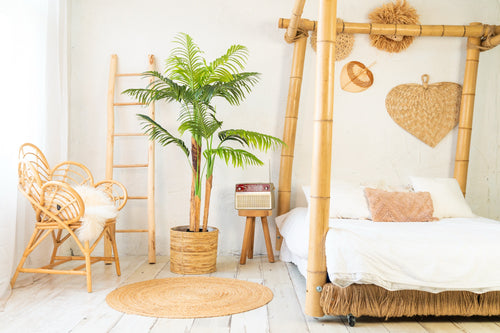
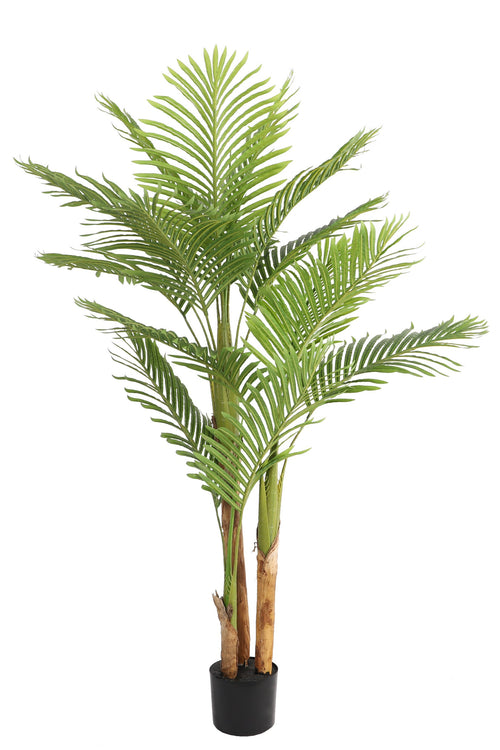
Artificial Kentia Palm 170 cm - tropical indoor design
104,92 excl. VAT
€126,95
incl. VAT
3
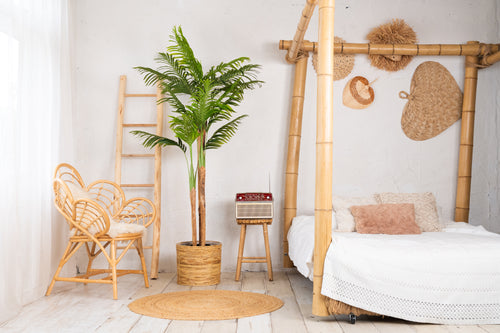
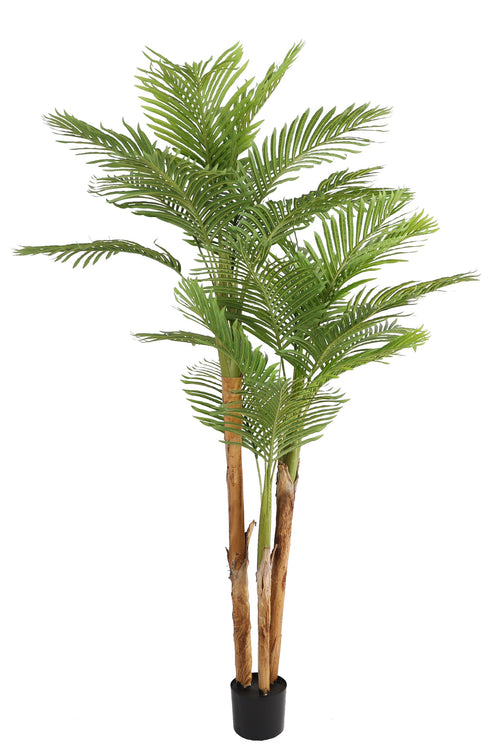
Artificial Kentia Palm 190 cm - tropical indoor design
98,31 excl. VAT
€118,95
incl. VAT
3
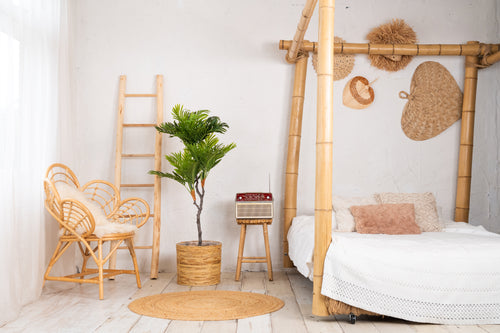
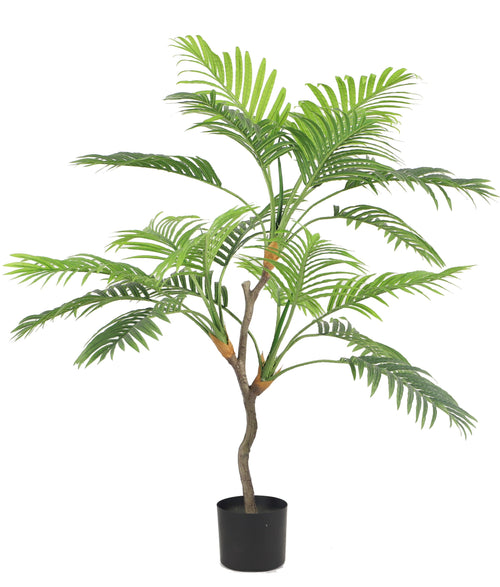
Artificial tropical mini Palm 120 cm
94,17 excl. VAT
€113,95
incl. VAT
In stock
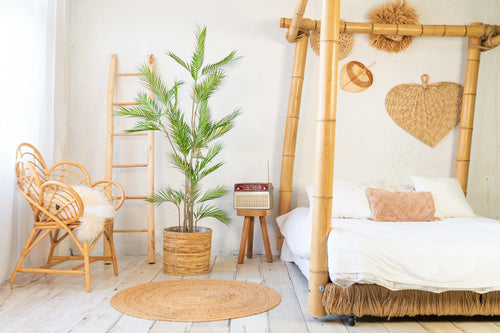
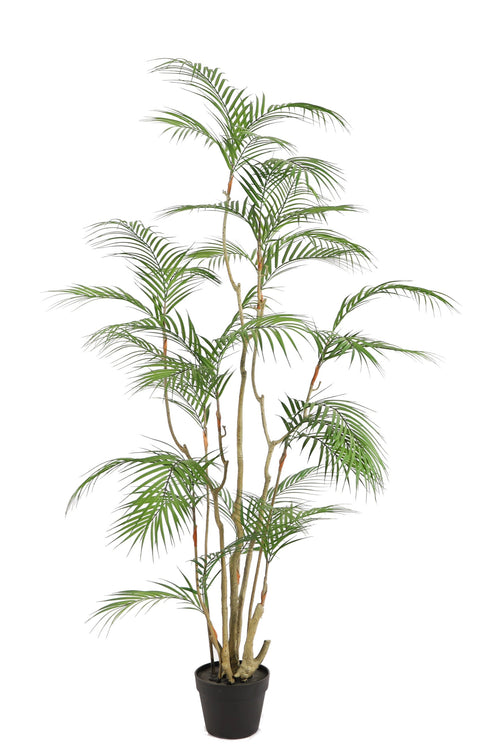
Artificial tropical Areca Palm 160 cm
94,17 excl. VAT
€113,95
incl. VAT
In stock
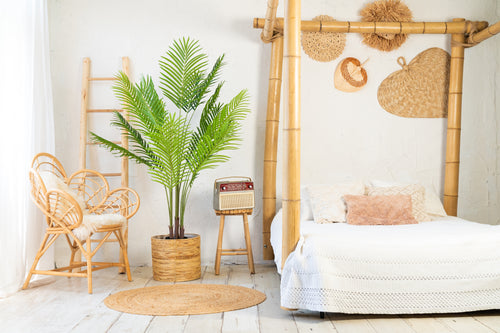
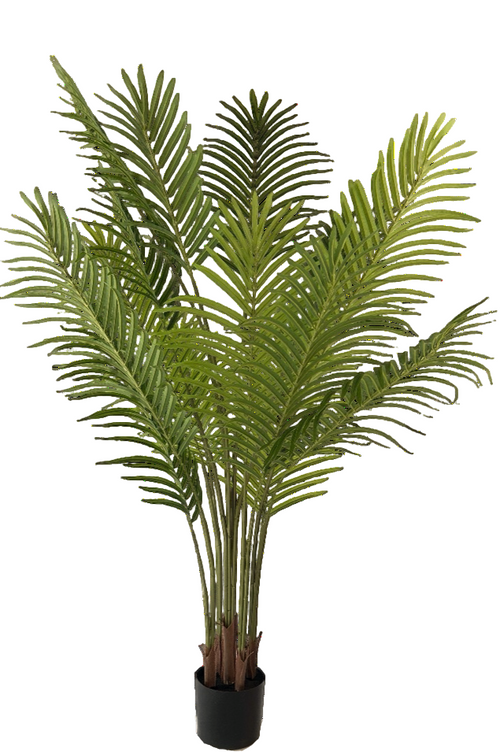
Artificial Phoenix Palm 160 cm
73,51 excl. VAT
€88,95
incl. VAT
1
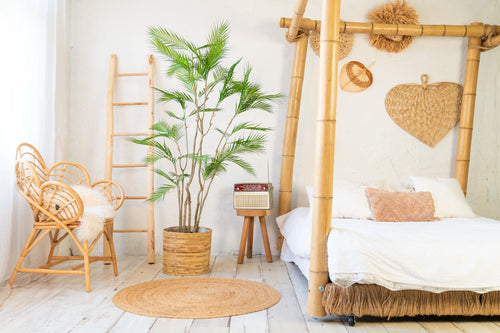
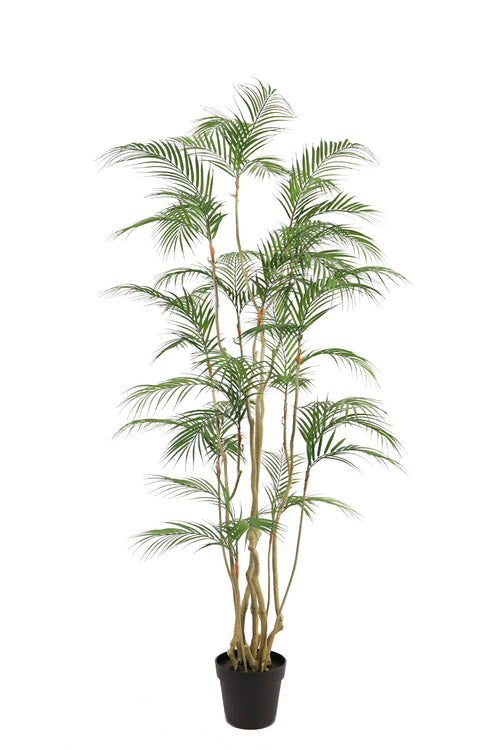
Artificial tropical Areca Palm 180 cm
98,31 excl. VAT
€118,95
incl. VAT
2
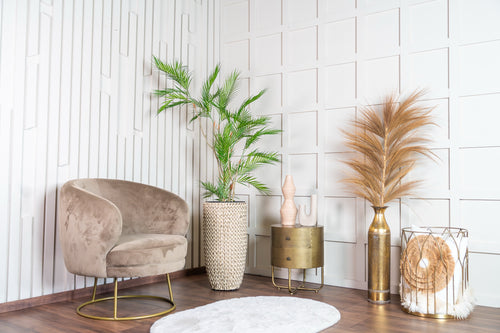
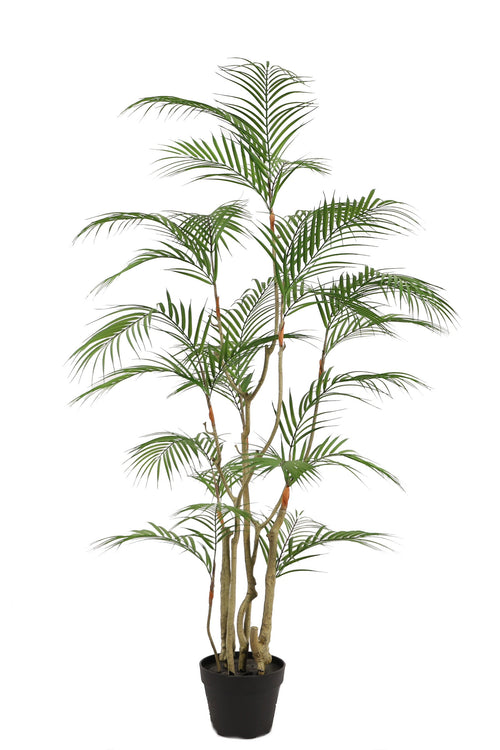
Artificial tropical Areca Palm 140 cm
95,00 excl. VAT
€114,95
incl. VAT
2
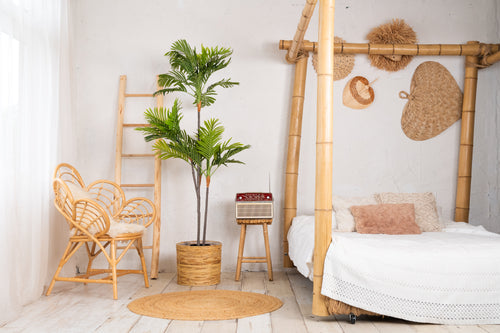
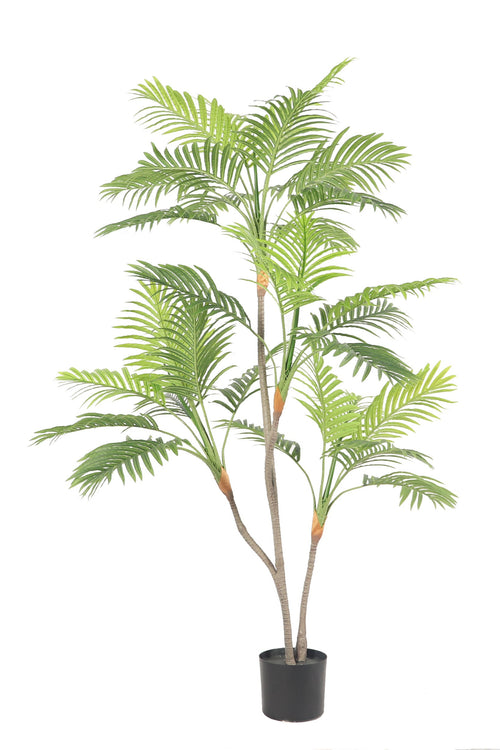
Artificial tropical mini Palm 170 cm
70,21 excl. VAT
€84,95
incl. VAT
2
In short: choose a Kentia if you want a calm, upright palm, an Areca if you are after volume and a wide fan, and a Phoenix if the palm may look rugged and tropical. For a living room, 160 to 180 cm is the size that fits most often.
The palms we carry
Palms differ mainly in how wide they fan out. That determines whether they fit in a corner or need space around them.
| Type | Shape | Heights we stock | Suits |
|---|---|---|---|
| Kentia palm | Slim, upright, narrow leaves | 170, 190 cm | A narrow corner or beside a cabinet, takes up little width |
| Areca palm | Wide fanning, many fronds | 140, 160, 180 cm | An open corner or next to the sofa, needs space |
| Phoenix palm | Sturdy trunk, stiff leaves | 160 cm | A tropical look, works well in hospitality and waiting areas |
| Mini palm | Compact, low | 120, 170 cm | On a cabinet, in a window sill or beside a desk |
How much space does a palm need
A palm is almost always wider than people expect. Allow around a metre of width for an Areca at 160 cm. A Kentia of the same height stays noticeably narrower. If the plant stands in a walkway, choose the Kentia. If you have an empty corner to fill, the Areca does it faster.
What to look for in an artificial palm
- The number of fronds. On a cheap palm you can see straight through the plant. More fronds means fuller, and from a distance that is the difference from a real one.
- Bendable stems. Palms are shipped packed. Without a metal core in the stems you cannot unfold the plant properly after unpacking.
- Colour gradient. Real palm leaves are lighter at the bottom than at the top. One even colour gives away the plastic.
- The trunk. On the Kentia and Phoenix the trunk is visible. A natural, irregular trunk makes the biggest difference there.
Indoors or outdoors
The palms on this page are made for indoor use. They are fine on a covered terrace or under a veranda, but not permanently exposed to wind and rain. For outdoors we have separate plants that withstand UV and rain.
Care
No water, no light, no repotting. Dust with a duster, and give the fronds of a long-untouched palm a gentle shake so they fall apart again. Our prices run between roughly 80 and 120 euros, depending on type and size.
Follow @neverleafs
Follow us on Instagram
This is how it looks in people's homes.
Real photos: sent in by customers and taken at our own shoots. No studio filters.


Frequently asked questions
Which artificial palm fits a narrow corner?
The Kentia. It grows upright and stays narrow. An Areca of the same height fans out much wider and needs about a metre of space.
How wide does an artificial palm get?
Allow around a metre of width for an Areca at 160 cm. A Kentia at 170 cm stays noticeably narrower. If the plant stands in a walkway, choose the Kentia.
Can an artificial palm stand outside?
The palms on this page are for indoor use. They are fine on a covered terrace or under a veranda, but not permanently exposed to wind and rain. We have separate plants that withstand UV and rain.
Why does one artificial palm look more real than another?
Usually the number of fronds and the colour gradient. On a thin palm you can see straight through the plant, and evenly coloured leaves give away the plastic. Real palm leaves are lighter at the bottom than at the top.
What does a good artificial palm cost?
Our prices run between roughly 80 and 120 euros, depending on type and height.
